
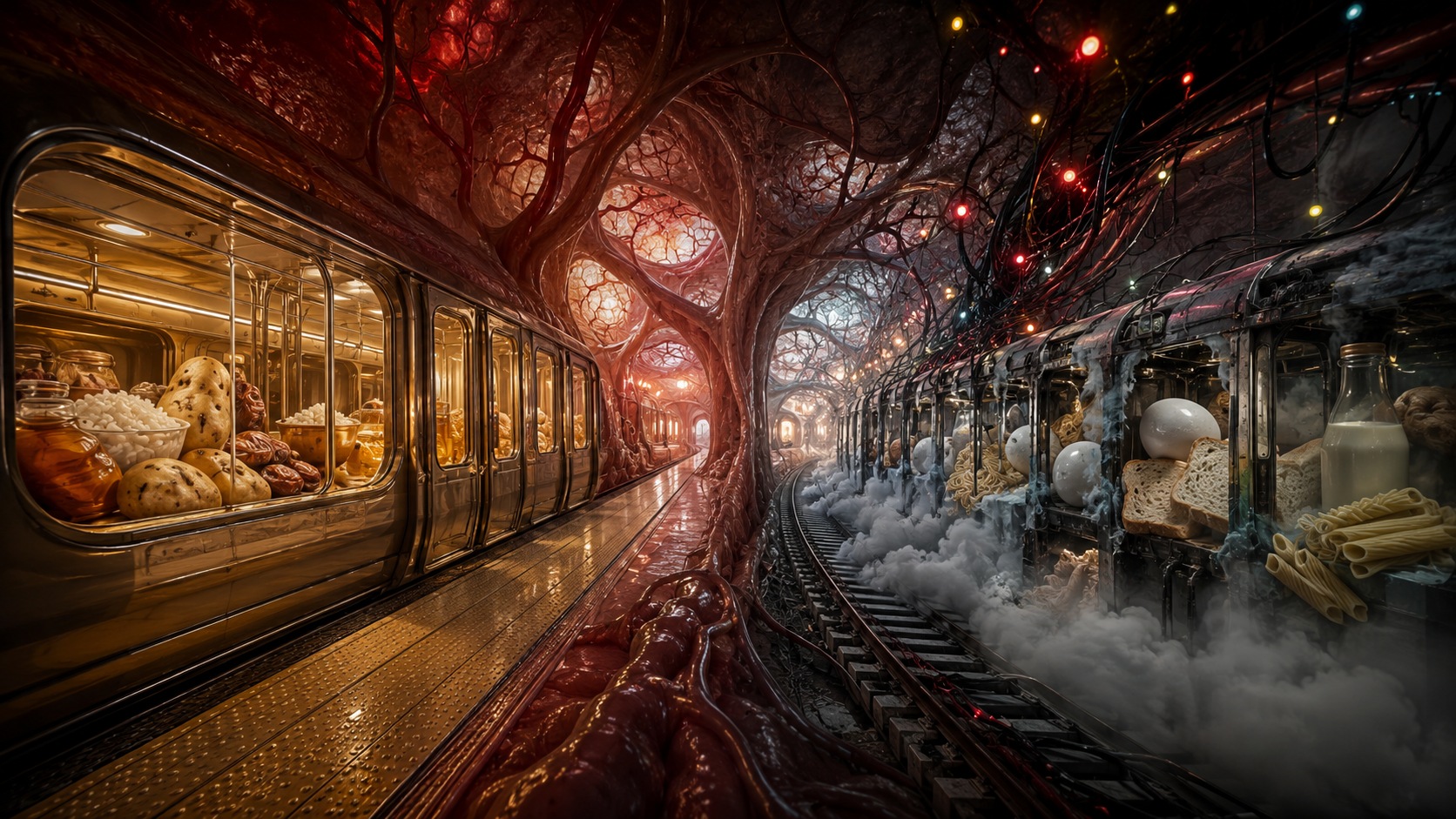
Imagine your body as a city. Every cell is a tiny factory working day and night. We usually blame the factory when something goes wrong. The cell is tired. The organ is weak. The disease showed up. So we stare at the factory.
But there is a better question.
Was the road to the factory open, or was it jammed with traffic and exhaust?
That question brings us to one of the most underrated ideas in the Tayibat System: interstitial tissue.
You may also hear it called the interstitium, interstitial space, or interstitial fluid depending on the context. The names sound technical. The idea is not.
This is the environment between your blood vessels and your cells. It is where nutrients and oxygen pass on their way in, and where carbon dioxide, excess fluid, and metabolic waste pass on their way out.
It is not empty space. It is not biological stuffing. It is not a decorative gap between “the real organs.” It is the place where the cell receives, breathes, communicates, and takes out the trash.
The cell does not eat directly from the blood. The cell lives from the environment around it.
Quick answer: what is interstitial tissue?
Interstitial tissue is the space and supporting environment between cells and blood vessels. Blood carries oxygen and nutrients through the circulation, but most cells do not touch the blood directly. Materials move from tiny blood vessels into the fluid around the cells, then from that fluid into the cells.
In the other direction, cells release carbon dioxide, excess water, and metabolic waste into this same surrounding space. From there, the body clears and recycles through blood flow and the lymphatic system.
In simple words: interstitial tissue is the delivery-and-pickup zone. Blood delivers. Cells receive. Cells release waste. The body drains.
Interstitial tissue, interstitial fluid, and ECM: what is the difference?
Let’s keep the science clean without turning this into a textbook nap.
The space and biological environment between cells, blood vessels, and structural tissue components.
The fluid inside that space. Nutrients, gases, signaling molecules, immune cells, and waste products move through it.
A living structural network made of collagen, elastin, glycoproteins, proteoglycans, and other molecules that shape the tissue and influence cell behavior.
A gel-like part of the ECM rich in molecules such as hyaluronan and glycosaminoglycans. It helps hold water and affects tissue flexibility and permeability.
Modern biology does not treat this environment as passive packing material. The extracellular matrix is constantly remodeled. When that remodeling goes wrong, it can be involved in fibrosis, chronic inflammation, tissue stiffness, and cancer biology.
Before asking what food contains, ask what it did
Most nutrition talk starts with a label. How much protein? How much calcium? How many calories? How many grams of fiber? Is it “healthy”? Is it “clean”? Does it look good in a breakfast photo?
Fine. Those questions are not useless.
They are just not enough.
The real question is not only what food contains. The real question is what food does inside the body.
Did it move quietly through digestion? Did it create a heavy workload? Did it irritate the gut? Did it trigger immune noise? Did it push more work toward the liver? Did it create more waste than the body wanted to handle today? Did it leave the cellular environment calmer, or more crowded?
The Tayibat lens does not read food as a brand name or a nutrient chart. It reads food as a journey.
Your cell is not eating the word “protein.” It is not eating a health claim. It is not eating a marketing halo. Your cell deals with the final biological result that reaches the environment around it.
Cells do not live directly from blood
Blood is the major transport system. It carries oxygen, glucose, amino acids, fatty acids, hormones, immune signals, and much more. But the cell does not simply dip a spoon into the bloodstream.
Between capillary blood and the cell, substances must cross a tissue environment. Some move by diffusion. Some move with fluid flow. Some are shaped by the extracellular matrix, pressure, inflammation, and tissue architecture.
So the deeper question is not only: Does the blood contain oxygen? Does it contain glucose? Does it contain nutrients?
The deeper question is: Can the cell receive them?
Why the “gel” metaphor actually works
Dr. Diaa’s explanation often describes the interstitial environment as something closer to a gel than a dry mechanical gap. That is a useful image.
A healthy interstitial environment is not concrete. It is not stone. It is not a stiff wall. It is a hydrated, flexible, dynamic space with structure and movement.
The ECM contains molecules such as glycosaminoglycans and hyaluronan, which are known for holding water and influencing tissue hydration, softness, permeability, and signaling. That is why the “gel-like” image is not just poetic. It points to a real biological property: the space around cells has texture, water balance, and mechanical behavior.
Careful wording: This does not mean interstitial tissue literally “dries up” like a sponge on a kitchen counter. A better way to say it is that hydration, stiffness, permeability, and fluid movement can change. Those changes may affect cellular exchange.
Fibrosis: when the road becomes a wall
Fibrosis sounds like one of those cold medical words that slides past people: liver fibrosis, lung fibrosis, kidney fibrosis, tissue fibrosis.
But inside the Tayibat way of thinking, fibrosis is not just a word in a report. It is a traffic story around the cell.
Instead of a flexible exchange zone, the tissue begins to accumulate excess matrix components, especially collagen. Instead of easy movement, the environment becomes stiffer. Instead of smooth drainage, there may be congestion. Instead of waste leaving efficiently, the neighborhood can become crowded.
If the exchange zone closes, the cell does not only starve. It can suffocate.
In many chronic diseases, fibrosis reflects an overactive repair process. The body tries to patch, protect, and rebuild, but the repair response becomes excessive. The result may be a scar-like environment that changes how oxygen, nutrients, immune cells, and signaling molecules move.
This is why “fibrosis” should not be read as a boring tissue stain. It may represent a functional barrier: less movement, less exchange, more stiffness, more stress.
Fibrosis usually has a long backstory
Fibrosis rarely behaves like a lightning bolt. It is usually a long road of repeated irritation, injury, inflammation, stress signals, and repair. The body keeps rebuilding the neighborhood, until the neighborhood itself becomes harder to live in.
That is where the Tayibat question becomes sharp: What daily noise came before the diagnosis?
Lymphatic drainage: the cleanup crew nobody claps for
The body does not only need delivery. It needs cleanup.
Food comes in. The body digests. Cells use materials. Energy is produced. Waste is produced. Fluid shifts. Proteins move. Immune cells patrol. If drainage works well, the neighborhood stays livable.
The lymphatic system helps collect excess interstitial fluid, proteins, immune cells, and other materials from tissue spaces and return them to circulation after filtering through lymph nodes.
When lymphatic drainage is impaired, as in lymphedema, tissues can develop chronic swelling. Over time, that may be associated with inflammation, tissue changes, and fibrosis. That is a powerful reminder: the environment around cells must drain, not just receive.
Simple image: A city can have perfect delivery trucks. If the drainage system is blocked, the city still floods.
Chronic inflammation: the low flame that changes the neighborhood
Inflammation is not always loud. It is not always fever, swelling, or sharp pain. Sometimes it is a low-grade signal that stays around for too long.
Chronic inflammation can activate fibroblasts. Fibroblasts can produce more collagen and other ECM components. The tissue becomes stiffer. Stiffness itself can send new mechanical signals to cells. Then the loop feeds itself.
Chronic inflammation activates repair cells and ECM remodeling.
A stiffer ECM changes mechanical signaling and may help maintain stress in the tissue.
That is how a quiet problem becomes a long-term environment. Inflammation creates remodeling. Remodeling creates stiffness. Stiffness changes signals. The cell ends up living in a tense neighborhood.
The Tayibat System does not read disease as a name only. Not “IBS” and done. Not “fatty liver” and done. Not “insulin resistance” and done. The deeper question is: what daily environment made this name possible?
Kidney, liver, lung: three examples that make the idea real
This is not floating philosophy. You can see the same logic in different organs.
| Organ | Interstitial / ECM idea | What it means here |
|---|---|---|
| Kidney | Kidney fibrosis involves excessive ECM deposition and changes around tubules and tiny vessels. | The kidney cell is affected not only by what is in the blood, but by the environment surrounding it. |
| Liver | The liver depends on delicate exchange spaces between blood and liver cells. Fibrosis can disturb that architecture. | The liver is not just a factory. It needs open delivery and drainage routes. |
| Lung | Thickening or fibrosis can interfere with gas exchange. | Having air in the lungs does not automatically mean oxygen reaches the blood efficiently. |
| Skin and soft tissue | Water balance, hyaluronan, and ECM structure influence flexibility, swelling, repair, and tissue behavior. | Softness and elasticity are not cosmetic details. They are biological function. |
The point is simple: life is not only about having nutrients available. Life is about movement, exchange, clearance, and response.
Interstitial tissue and cancer: tumors do not grow in empty space
This section needs both courage and care.
Modern cancer biology no longer talks about a tumor as cancer cells alone. It talks about the tumor microenvironment: extracellular matrix, blood vessels, immune cells, fibroblasts, interstitial pressure, fluid flow, stiffness, oxygen gradients, and signaling molecules.
Interstitial fluid flow and pressure inside tumor tissue may influence invasion, progression, and even how treatments reach the tumor environment. That does not make the environment the only cause of cancer, but it makes it impossible to ignore.
This is where medical literature meets one of Dr. Diaa’s deeper questions:
Did the tumor appear in healthy ground, or in a cellular environment that had already become pressured, inflamed, stiff, and poorly drained?
The Tayibat System does not present cancer as a foreign monster that fell out of the sky. It also does not tell anyone to ignore oncology, surgery, chemotherapy, radiation, immunotherapy, or medical follow-up. That would be reckless.
What it does is open a wider question: what happened to the tissue environment before the tumor became visible?
Within Dr. Diaa’s model, a tumor may be read as a late defensive or emergency plan inside a tissue that has reached a state of poor exchange, waste accumulation, inflammation, or fibrosis. That is a philosophical and biological lens, not a treatment promise.
Safe wording: Cancer should not be reduced to the tumor mass alone. It happens inside a changed cellular environment. This does not replace medical care. It simply reminds us that the “ground” matters too.
Fasting is not magic. It is a pause in new workload.
In the Tayibat philosophy, fasting is not a miracle button. It is not a universal cure. It is not a badge of toughness. It should never be turned into a blind protocol for everyone.
The cleanest way to explain fasting here is this: fasting reduces new inputs for a while.
That pause may reduce digestive workload, reduce the creation of new waste, give the body more room to clear what is already there, and quiet some of the daily biological noise. That is the logic.
But the safety line matters. Fasting is not automatically safe for people with diabetes, kidney disease, liver disease, cancer, pregnancy, eating disorders, frailty, or medications that require food or timing. Those cases need medical supervision.
Fasting, in the Tayibat lens, is a quiet window for the body. Not a random war against food.
So what does food have to do with interstitial tissue?
Every meal is not an isolated event. It is a journey.
- Mouth
- Stomach
- Intestines
- Liver
- Blood
- Interstitial fluid
- Cell
The question is: what did that journey leave behind?
Did useful material arrive quietly? Or did the meal create heaviness, digestive struggle, immune noise, liver workload, insulin confusion, more waste, or a crowded environment around the cell?
This is why the Tayibat System sounds different from usual nutrition talk.
Common nutrition says: eggs are protein, chicken is lean, oats are healthy, milk is calcium, vegetables are always good.
The Tayibat System asks:
After it entered the body, what did it do?
Did it pass quietly? Did it cost too much? Did it irritate the gut? Did it activate the immune system? Did it leave the cellular environment calmer or heavier?
Not every benefit is worth the internal cost.
A simple everyday example
You can eat something the world calls healthy and then feel heavy, foggy, bloated, sleepy, congested, acidic, slow, or weirdly off.
The shallow response is: “But it is healthy. Keep eating it.”
The Tayibat response is: if it is so friendly, why is your body making noise?
Not every signal means danger. But every signal deserves to be heard.
The rule this article is really teaching
I ate something nutritious, so my body benefited.
I ate something. My body had to digest it, process it, signal around it, clear the waste, and deliver the result to the cell. Only then can we ask whether the benefit was worth it.
That is a huge shift. It moves us from reading food on paper to reading food inside the body.
Not just calories. Not just protein. Not just vitamins. Digestion, immune response, liver workload, insulin signaling, inflammation, drainage, sleep, energy, mood, and the interstitial environment all matter.
Your body does not eat the name. Your body eats the whole journey.
Does this mean interstitial tissue causes every disease?
No. And that “no” matters.
Interstitial tissue is not the single cause of every disease. Human disease can involve genetics, infections, immune dysfunction, hormones, toxins, trauma, medications, age, sleep, stress, environment, and many other factors.
But the interstitial environment is a major stage where many of those forces meet. It is where oxygen delivery, nutrient exchange, waste clearance, immune signals, fluid balance, fibrosis, and cellular behavior come together.
So even if it is not the only cause, it is often part of the story.
Medical note: This article is educational. It does not diagnose, treat, or replace medical care. Fibrosis, tumors, kidney disease, liver disease, lung disease, lymphedema, cancer, or any chronic condition require qualified medical evaluation and follow-up. The Tayibat System is presented here as a framework for understanding daily biological workload and the internal environment, not as a substitute for treatment.
FAQ
What is interstitial tissue in simple words?
It is the space and biological environment between blood vessels and cells. Nutrients and oxygen move through this environment before reaching cells, and waste products move through it on the way out.
Is interstitial tissue the same as interstitial fluid?
Not exactly. Interstitial tissue or interstitium refers to the space and structure between cells. Interstitial fluid is the fluid inside that space. The extracellular matrix is the structural network that helps shape and regulate the environment.
Why does the Tayibat System care about interstitial tissue?
Because Tayibat does not read food as nutrients only. It reads food as a journey. The final question is what reached the cell, what accumulated around it, and whether the cellular environment became calmer or more burdened.
Can fibrosis affect nutrient and oxygen delivery?
Fibrosis can change tissue architecture, increase stiffness, and affect exchange, diffusion, fluid movement, and cell signaling. Its impact depends on the organ, severity, and clinical context.
What does lymphatic drainage have to do with interstitial tissue?
The lymphatic system helps drain excess interstitial fluid, proteins, immune cells, and other materials from tissues. Poor drainage can contribute to swelling, inflammation, and tissue changes.
Does interstitial tissue cause cancer?
No single tissue environment explains cancer by itself. Cancer is complex. But the tumor microenvironment, including ECM, immune cells, blood vessels, interstitial pressure, and fluid flow, can influence tumor behavior and treatment delivery.
Does fasting heal fibrosis or cancer?
No. Fasting should not be presented as a treatment for fibrosis or cancer. In the Tayibat philosophy, fasting is better understood as reducing new inputs and workload for a period of time. Medical conditions require professional care.
Scientific sources
These references support the biological discussion of interstitial tissue, extracellular matrix, fibrosis, lymphatic drainage, and the tumor microenvironment. They are not used here to make treatment claims.
Benias PC et al. 2018 — Structure and Distribution of an Unrecognized Interstitium in Human Tissues
Scientific Reports. A widely discussed paper describing fluid-filled spaces in human tissues supported by collagen bundles and related to pre-lymphatic spaces.
Cox TR, Erler JT. 2011 — Remodeling and homeostasis of the extracellular matrix
Disease Models & Mechanisms. A review on ECM remodeling and its role in fibrosis and cancer.
Bülow RD, Boor P. 2019 — Extracellular Matrix in Kidney Fibrosis: More Than Just a Scaffold
Journal of Histochemistry & Cytochemistry. A review explaining ECM as an active player in kidney fibrosis, not just a passive scaffold.
Munson JM, Shieh AC. 2014 — Interstitial fluid flow in cancer
Cancer Management and Research. A review on interstitial fluid flow, tumor progression, invasion, and treatment delivery.
Sodhi H, Panitch A. 2020/2021 — Glycosaminoglycans in Tissue Engineering: A Review
A review discussing glycosaminoglycans, including hyaluronan, and their role in ECM structure and cell behavior.
Sleigh BC, Manna B. — Lymphedema
StatPearls / NCBI Bookshelf. A clinical overview of lymphedema and impaired lymphatic drainage.
Pittman RN. 2011 — The Circulatory System and Oxygen Transport
NCBI Bookshelf. A physiology reference useful for understanding circulation, oxygen delivery, and tissue exchange.
Harper EI et al. 2023 — A Wrinkle in TIME: how changes in the aging ECM drive the hallmarks of aging
A review on ECM changes with aging and their relationship to microenvironment, inflammation, and cell behavior.
If this article changes how you see the body, keep the rule close: food is not just nutrients. Food is a journey inside the body. Your cells do not live from promises on a label. They live from the environment around them. Your body is not your enemy. It may be sending signals.