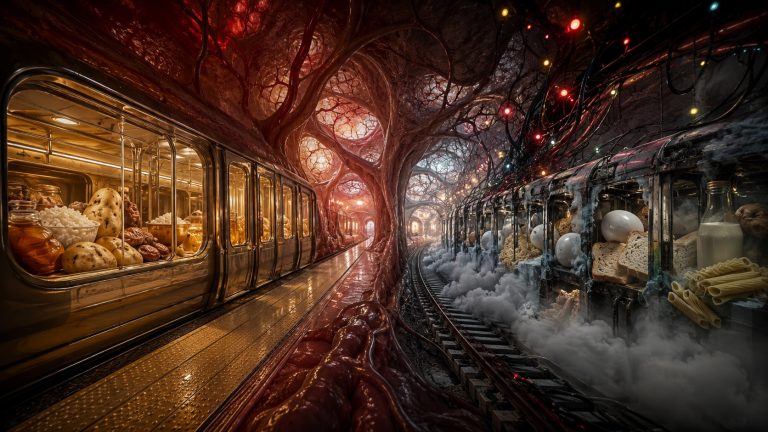


Bread may look like quick fuel, but some bodies experience refined flour as fast digestion, fast storage signals, and a strange slowdown after eating.
You ate the sandwich because you needed energy. Thirty minutes later, your eyes are heavy, your focus is gone, and your body feels slower than it did before lunch. The bread was supposed to fuel you, but now your afternoon feels like it has been wrapped in a soft white blanket and told to sit down.



That is the strange thing about refined flour. On paper, it looks like quick fuel: carbohydrates, calories, energy, simple enough. But inside the body, quick does not always mean clean. Fast does not always mean steady. And food that disappears easily in the mouth does not always pass quietly through the body.
Refined flour fatigue is not a formal diagnosis. It is a practical way to describe something many people notice: feeling sleepy, foggy, heavy, or drained after eating white bread, pastries, pizza crust, pasta, crackers, or other refined-flour foods.
The question is not only whether refined flour contains energy. The better question is: what kind of journey does that energy create?
Quick Answer: Why Can Refined Flour Make You Tired?
Refined flour may leave some people tired because it is often digested quickly, low in structural fiber, easy to overeat, and commonly eaten in soft processed foods that create a fast post-meal response.
That response may include a quicker rise in blood glucose, a stronger insulin signal, a shift into rest-and-digest mode, digestive heaviness, bloating in sensitive people, and sometimes a later energy dip.
This does not mean bread makes everyone tired. It does not mean insulin is bad. It does not mean carbs are the enemy. It means refined flour can create a specific internal timing: fast breakdown, fast delivery, fast signals, and sometimes unstable energy afterward.
For some people, that may feel like:
Brain fog after refined-flour meals
Heavy stomach after pastries or pizza
Hunger returning quickly
Cravings later in the day
Low energy 1 to 4 hours after eating
Bloating that drains energy
A body that feels switched off
The body is not being lazy. It may be responding to the speed and structure of the meal.
Refined Flour Is Not Just Carbs
The common nutrition conversation is too small for refined flour. It says: carbs give energy. That is partly true, but the body does not receive carbs as an abstract category. It receives a physical food with a certain texture, particle size, fiber content, cooking method, and meal context.
White flour begins as grain, but it does not enter the body as grain. It enters as something that has been stripped of much of its bran and germ, milled into fine powder, mixed with water, turned into dough, baked or processed, softened into foods that require little chewing, and repeated across meals and snacks.
This matters because the body reads the form, not just the label. A whole or more intact carbohydrate source is not the same journey as finely milled refined flour. The calories may look similar, but the timing, digestion, and signals can feel very different.
Food is not just fuel. Food is fuel with instructions.
The Tayibat View: Quick Fuel Can Become Quick Work
In the Tayibat System, food is not judged only by what it contains. The deeper question is: what does this food do inside the body?
Refined flour is a perfect example. It may contain energy, but the body has to manage how that energy arrives. If it arrives quickly, softly, repeatedly, and without much fiber or structure, the body may respond differently than it would to slower, more intact food.
This is not about fear. It is about timing. A fast meal can create fast signals: fast glucose appearance, fast insulin response, fast fullness, fast hunger rebound, fast sleepiness, and fast cravings. Not in everyone, but in enough people that the signal deserves attention.
Your body does not only ask, “Is there energy here?” It asks, “How fast is this energy arriving, and what do I have to do with it now?”
Why White Bread Can Feel Like Energy at First
Refined flour can feel energizing at first because it is easy to break down. White bread, soft buns, pastries, crackers, and many refined-flour foods are designed to be eaten quickly. They require less chewing, break apart easily, and often contain starch that is more accessible because milling and cooking have already changed the grain structure.
So yes, refined flour may deliver energy quickly. But quick energy is not the same as stable energy.
Think of lighting paper versus lighting a thick piece of wood. Paper catches fast, burns bright, and disappears quickly. Wood takes longer, but the heat lasts. Refined flour is not literally paper, of course, but the timing idea matters. When food is refined into a fast-access form, the body may receive a sharper signal instead of a slower release.
For some people, that sharp signal feels good for a short time. Then the drop comes.
The Glucose-Insulin Timing Problem
After eating refined flour, starch breaks down into glucose. Glucose enters the bloodstream. The body releases insulin to help move glucose into cells and manage the post-meal state. This is normal. Insulin is not a villain. It is part of how the body handles food.
The problem is not insulin itself. The problem is the timing and intensity of the signal.
When refined-flour foods are eaten in large amounts, quickly, or without enough balancing structure in the meal, the body may experience a faster rise and a stronger response than it would with slower, more intact foods. Some people then feel a dip later.
That dip may not always be true hypoglycemia. It may simply be an energy shift, a relative drop, a rest-and-digest wave, or the body moving from rapid fuel arrival into storage and recovery signals.
But the experience can be real: heavy eyes, slow thinking, reduced alertness, hunger returning too soon, craving more bread or sugar, and a body that feels switched off after eating.
This is why refined flour can be confusing. It gives energy, but the body may not experience that energy as steady fuel.
Why Storage Signals Can Feel Like Sleepiness
After a refined-flour meal, the body does not only think about energy. It thinks about storage, movement, digestion, hormones, and balance.
If a meal delivers carbohydrates quickly, insulin helps direct that fuel where it needs to go. Some is used. Some is stored. The body shifts into a post-meal state. That post-meal state can feel calm and normal after a balanced meal.
But after a large refined-flour meal, some people feel like their system has changed modes too aggressively: from awake to slow, from focused to foggy, from fueled to parked.
This is not because the body is doing something wrong. It may be doing exactly what the meal asked it to do: handle a fast incoming load.
That is the hidden difference between energy on paper and energy in the body.
Post-Meal Sleepiness Is Not Always About Blood Sugar
It is tempting to explain every tired feeling after bread as a blood sugar crash, but that is too simple. Post-meal fatigue can come from many overlapping signals: meal size, speed of eating, low fiber, rapid starch digestion, insulin response, gut hormones, rest-and-digest activation, poor sleep, stress, dehydration, medications, anemia, thyroid issues, or blood sugar problems.
So no, feeling tired after bread does not automatically mean you have reactive hypoglycemia, diabetes, gluten sensitivity, or a serious disease. But if the pattern repeats, it is worth noticing.
The body may be telling you that this meal does not create clean energy for you.
The Gut-Brain Axis: Why Digestion Can Change Alertness
The gut and brain are not separate rooms. After you eat, the gut sends signals through hormones, nerves, immune pathways, and blood flow changes. Digestion activates the parasympathetic nervous system, often called the rest-and-digest state.
That is normal. But if the meal is large, soft, rapidly digested, low in fiber, or uncomfortable in the gut, the post-meal state may feel heavier.
Some people describe it as sleepiness. Others call it brain fog. Others say they feel like their body wants to shut down after bread. From the Tayibat perspective, this is not laziness. It is a signal.
Your body may be saying: this meal arrived too fast, too soft, too often, or with too little structure.
Why Bread Is Often More Than Bread
Another reason refined flour fatigue is tricky is that people rarely eat flour alone. They eat refined-flour products.
A sandwich is not just bread. Pizza is not just crust. A croissant is not just flour. A pastry is not just carbohydrates. Many refined-flour foods come with added fats, sugar, cheese, processed meats, creamy sauces, emulsifiers, preservatives, large portions, and a soft texture that encourages fast eating.
This is important. If you feel tired after pizza, it may not be flour fatigue alone. It may be the full pizza event: refined crust, cheese, oils, salt, toppings, portion size, and eating speed. If you feel sleepy after a pastry, it may be refined flour plus sugar plus fat plus low fiber. If you feel heavy after pasta, it may be portion size, sauce, cheese, cooking texture, and the fact that the meal was mostly refined starch.
The body receives the full event, not the ingredient list separately.
Ultra-Processed Refined Flour: The Repeatable Food Problem
Refined flour is often the foundation of ultra-processed foods. These foods are not only refined. They are engineered to be easy to eat, easy to repeat, and hard to stop at a small amount.
That matters for energy. When a food is soft, salty, sweet, fatty, and refined, it can be eaten quickly before fullness signals catch up. This may lead to a bigger meal than the body needed.
A bigger meal means a bigger digestive task. A bigger digestive task can mean more post-meal sluggishness.
Again, the issue is not one bite. The issue is the pattern: refined-flour breakfast, refined-flour snack, refined-flour lunch, refined-flour dinner, refined-flour dessert. The body may spend the whole day handling fast food signals without ever getting a stable rhythm.
That is not energy. That is a loop.
Not Every Bread Reaction Is Gluten
Many people jump straight to gluten. They eat bread, feel bloated or tired, and assume gluten is the villain.
Sometimes gluten matters. In celiac disease, gluten triggers an autoimmune response and needs strict medical management. In wheat allergy, wheat can trigger allergic symptoms. Some people may also experience non-celiac wheat sensitivity.
But not every reaction after bread is gluten. Wheat also contains fructans, which are fermentable carbohydrates that can trigger gas and bloating in some sensitive people, especially those with IBS-type symptoms. That bloating can then create secondary fatigue.
If the gut is distended, uncomfortable, and full of gas, the body may feel drained. Not because bread poisoned you, but because digestion became a task instead of a smooth process.
So the smarter question is not, is gluten bad? The smarter question is: which part of this refined-flour meal is my body reacting to?
Why Some People Feel Fine After Bread
This article is not saying everyone gets tired after refined flour. Some people eat bread and feel completely fine. That matters.
Human responses to the same food can vary widely. One person may eat a white bread sandwich and feel normal. Another may feel sleepy, bloated, hungry again, or mentally slow.
Differences may come from baseline metabolic health, sleep quality, stress level, activity after eating, gut microbiome, meal composition, portion size, eating speed, insulin sensitivity, or wheat and FODMAP sensitivity.
This is why food advice becomes dangerous when it speaks as if every body is identical. Your friend’s body is not your lab report. Your body is the one giving you the signal.
Daily Repetition: When Bread Becomes Background Noise
One refined-flour meal is one event. Daily refined flour is a pattern.
That pattern may be breakfast toast, a lunch sandwich, crackers, pasta, pizza, cake, biscuits, pastries, and fast-food buns across the week. Most people do not count this as repetition because each food has a different name.
But the body may see the shared pattern: refined flour, soft texture, fast starch, low fiber, repeated signal. Different names. Similar journey.
This is where refined flour fatigue becomes easier to understand. Your body may not object to one meal. It may object to the daily rhythm.
That rhythm may keep pushing the body into quick fuel, quick storage, quick hunger, quick tiredness, and another search for quick fuel. That is not energy. That is a loop.
How to Tell If Refined Flour Is Part of Your Fatigue Pattern
You do not need to diagnose yourself from one sleepy lunch. You need to observe patterns.
Ask whether you get sleepy after white bread more than after other meals, whether pastries or pizza make you feel heavier than expected, whether hunger returns soon after refined-flour meals, and whether you feel foggy 1 to 4 hours after bread, pasta, or crackers.
Also notice whether symptoms improve when refined flour is reduced for a few days, whether you feel different with more intact or slower foods, whether the reaction changes when you eat slower, and whether a more balanced meal context changes the reaction.
Keep notes for a week or two. Track the food, the time, the portion, what came with it, how fast you ate, and how you felt afterward. This is not obsession. It is basic body literacy. Your body may be giving you data.
Ways to Make Refined-Flour Meals Less Sleepy
If refined flour seems to make you tired, the answer is not automatically “never eat bread again.” Start with the journey.
You may experiment with eating refined-flour foods less frequently instead of all day, reducing very large portions of bread, pasta, pizza, pastries, or crackers, eating slower, chewing more, and avoiding refined flour as the whole meal by itself.
You may also notice whether white bread, pastries, pizza, and pasta affect you differently, test more intact carbohydrate sources that your body tolerates, walk gently after meals if appropriate for you, and sleep better before blaming the meal completely.
The goal is not perfection. The goal is a calmer internal signal. If a food leaves you sleepy every time, your body may be asking for a different structure, a different portion, a different timing, or less repetition.
When Tiredness After Bread Needs Medical Attention
Most post-meal sleepiness is not dangerous, but some symptoms should not be brushed off as “just food.” Speak with a healthcare professional if you experience severe or persistent fatigue after most meals, fainting or near-fainting after eating, dizziness, sweating, trembling, rapid heartbeat, confusion, known diabetes or prediabetes, use of blood-sugar-lowering medication, unexplained weight loss, blood in stool, chronic diarrhea, iron-deficiency anemia, severe reflux, difficulty swallowing, symptoms suggesting celiac disease, or allergic symptoms after wheat.
Children, pregnant women, older adults, and people with chronic medical conditions should be especially careful with major diet changes. If you suspect celiac disease, do not start a gluten-free diet before proper testing unless your doctor tells you to. Removing gluten too early can make diagnosis harder.
Final Thought: Bread Is Not Just Fuel
Refined flour can give energy. But the body does not only care that energy exists. It cares how it arrives: fast or slow, soft or structured, alone or balanced, occasional or repeated, calm or noisy.
This is why bread can feel like fuel for one person and fatigue for another. The food is not only what it contains. It is what it does.
So if refined flour leaves you sleepy instead of fueled, do not turn that signal into fear. Turn it into a question: what journey did this meal create inside my body?
Because your body is not your enemy. It may simply be telling you that quick fuel is not always steady energy.
Medical note: This article is for educational purposes only. It does not diagnose, treat, or replace medical advice. If you have severe or persistent fatigue after meals, symptoms of low blood sugar, suspected celiac disease, wheat allergy symptoms, diabetes, unexplained weight loss, blood in stool, chronic diarrhea, anemia, or difficulty swallowing, speak with a qualified healthcare professional.
FAQs About Refined Flour Fatigue
What is refined flour fatigue?
Refined flour fatigue is a practical phrase for feeling sleepy, foggy, heavy, or low-energy after eating refined-flour foods such as white bread, pastries, pizza crust, pasta, crackers, or cakes. It is not a formal diagnosis, but it can describe a repeated body pattern.
Why does bread make me tired after eating?
Bread made with refined flour may digest quickly and create a faster glucose-insulin response. Some people experience that timing as sleepiness, brain fog, hunger rebound, or low energy after eating.
Does feeling tired after bread mean I have diabetes?
No. Feeling tired after bread does not automatically mean diabetes. Fatigue after meals can come from meal size, sleep, stress, digestion, blood sugar patterns, medications, anemia, or other causes. If symptoms are severe, persistent, or come with shakiness, sweating, dizziness, or confusion, speak with a healthcare professional.
Is gluten the reason I feel tired after bread?
Not always. Gluten matters in celiac disease and may matter for some people with wheat-related disorders, but fatigue or bloating after bread may also involve fructans, refined texture, portion size, additives, meal context, or overall digestion.
Can white bread cause an energy crash?
For some people, yes. White bread and other refined-flour foods may create a faster rise and later dip in energy, especially when eaten alone, in large portions, or as part of a low-fiber meal. But not everyone responds the same way.
Does whole grain bread prevent refined flour fatigue?
Whole-grain bread may create a slower and more structured digestive response for some people, but it is not magic. Some whole-grain products are still finely milled or highly processed, and some people still react to wheat components.
How can I tell if refined flour is making me sleepy?
Track your meals and energy for one or two weeks. Notice whether sleepiness happens more after white bread, pizza, pastries, pasta, or crackers compared with other foods. Also track sleep, stress, portion size, and what else was in the meal.
Should I stop eating bread completely?
Not automatically. Some people tolerate bread well. If refined-flour foods repeatedly make you tired, you can try reducing frequency, changing meal structure, eating slower, or testing less processed options. Persistent or severe symptoms should be discussed with a clinician.