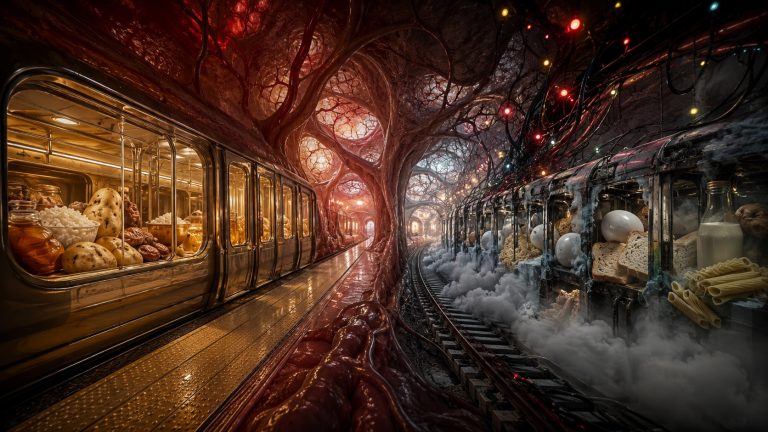


Pasta and rice are often treated like twins: two bowls, two carb sources, two simple choices on the same nutrition spreadsheet. But your stomach may strongly disagree.


One person can eat rice and feel calm, light, and normal, then eat pasta and feel heavy, bloated, sleepy, or stuck. Another person may notice the opposite. Someone else may tolerate both until the sauce, portion size, cooking method, or time of day changes everything.
So what is going on? The answer is not as simple as “carbs.” Your body does not digest spreadsheet categories. It digests food forms.
Pasta arrives as processed wheat structure. Rice arrives as cooked grain. That difference matters.
This is the real story behind pasta vs rice digestion. Not a diet war. Not carb panic. Not another “which one is healthier?” article with a tiny trophy at the end. This is about the journey inside the body.
Quick Answer: Pasta vs Rice Digestion
Pasta and rice may both contain carbohydrates, but they can digest very differently because their physical structures are different. Pasta is usually a wheat-based processed food made from semolina or flour and water, shaped into a dense starch-protein matrix. Rice is usually cooked as grains, with a different starch structure, texture, chewing experience, and gut profile.
Pasta may feel heavier or more bloating-triggering for some people because of wheat fructans, gluten-related conditions, portion size, sauce, density, and meal context. Rice is naturally gluten-free and generally low-FODMAP, which may make it feel calmer for many sensitive stomachs. Still, rice is not perfect for everyone. Its response depends on type, portion, cooking method, cooling, reheating, and the full meal.
So the smarter question is not: which one has fewer carbs? The better question is: which food form does your body handle with less noise?
Your Body Does Not Digest Categories
“Carbs” is a category. Digestion is an event. That difference changes everything.
When people say pasta and rice are both carbs, they are not wrong. They are just stopping too early. Your body does not stop at the label. It has to deal with the real physical food: the structure, texture, starch accessibility, protein network, cooking method, portion size, sauce, meal pairing, gut sensitivity, and daily repetition.
A bowl of pasta and a bowl of rice can have similar carb numbers and still create completely different internal experiences.
The body does not ask, “Is this a carbohydrate?” It asks, “What form just entered?”
That is why the pasta vs rice question is not really a carb debate. It is a body journey debate.
Pasta Arrives as Processed Wheat Structure
Pasta usually starts with durum wheat semolina or flour and water. That mixture is shaped, pressed, extruded, dried, sometimes stored for long periods, then boiled before eating. By the time pasta reaches your plate, it is not simply “starch.” It is a structured wheat product.
Inside pasta, starch granules are held within a protein network, especially gluten-related structure. This dense matrix can affect how quickly digestive enzymes reach the starch. This is one reason pasta may sometimes produce a lower blood glucose response than people expect, especially compared with some rice types or bread products.
But here is the twist: a lower glycemic response does not automatically mean the food feels light in the stomach.
Pasta can be slower on a glucose chart and still feel heavy in a real human stomach.
That is the kind of nuance most nutrition comparisons miss. The body has more than one way to respond. Blood sugar is one signal. Bloating is another. Stomach heaviness, reflux, sleepiness, fullness, and gut comfort are all part of the journey.
Rice Arrives as Cooked Grain
Rice is also a carbohydrate-rich food, but it usually reaches the body in a different form. Cooked rice is generally eaten as grains, either separate or semi-separate depending on the variety and cooking method. Even white rice, which has been polished, still keeps a grain-like form compared with flour-based foods.
Rice is naturally gluten-free. It is generally low-FODMAP in typical servings. It does not contain wheat fructans. It does not carry the same gluten-starch network that pasta does. That does not make rice magic, but it makes rice a different digestive event.
Some people feel rice passes more calmly because it has a simpler form, fewer wheat-related triggers, and a different texture in the mouth and stomach. Still, rice can create problems when portions are large, when the rice variety is high glycemic, when the meal is heavy, or when it becomes a repeated daily base without enough body awareness.
Rice may feel calmer for some people, but calm does not mean unlimited.
The Core Difference: Processed Wheat Matrix vs Cooked Grain
This is the heart of the comparison. Pasta is processed wheat structure. Rice is cooked grain. Both can be eaten in simple or heavy ways. Both can be overused. Both can raise blood sugar depending on type, amount, cooking, and context. But they do not enter the body as identical objects.
Pasta brings wheat structure, a gluten-starch matrix, dense texture, possible fructans, portion creep, sauce dependency, and a different stomach experience. Rice brings grain structure, amylose and amylopectin variation, no gluten, a low-FODMAP profile, cooking effects, resistant starch potential after cooling, and different meal traditions and pairings.
So yes, both may be carbs. But to the body, they can feel like two different languages.
Why Pasta May Feel Heavier Than Rice
Many people describe pasta with one word: heavy. Not always painful. Not always bloating. Just heavy, like the meal is sitting there longer than expected. There are several possible reasons.
1. Pasta is dense
Pasta is not airy like bread and not separate like rice. It is dense, compact, and often eaten in a fairly large portion. That density can create a stronger fullness signal. For some people, that feels satisfying. For others, it feels like stomach pressure.
2. Pasta may feel slower in the stomach
Dense foods and mixed meals can stay in the stomach longer. Pasta, especially when eaten with fat-heavy sauces, cheese, cream, oils, or meat, may create a slower stomach experience than plain rice. Slower is not always bad. Slower can mean more satiety. But in a sensitive stomach, slower can also feel like heaviness.
3. Pasta portions are sneaky
A realistic pasta serving on a plate is often much larger than the serving used in nutrition tables. It is easy to eat a large bowl, especially with sauce, cheese, and oil. That means the body may be handling more total food mass than the person realizes.
4. Pasta rarely arrives alone
Plain pasta is one story. Pasta with cream sauce, garlic, onion, cheese, processed meat, heavy oil, or fried toppings is another story entirely. When someone says “pasta makes me heavy,” the pasta may not be acting alone.
Your body does not digest pasta from a textbook. It digests the whole bowl.
Why Rice May Feel Lighter for Some People
Rice often feels simpler to many people because its structure and gut profile are different. Plain rice is usually cooked with water. It is naturally gluten-free. It is generally low-FODMAP. It does not contain wheat fructans. It does not come with the same dense gluten-starch matrix as pasta.
For people with IBS-like symptoms, wheat sensitivity, or frequent bloating after wheat products, rice may feel calmer. But that does not mean rice always feels light. Large rice portions can feel heavy. Sticky rice can create a different response from basmati rice. Brown rice may bother some sensitive guts because of its fiber and bran layer. Rice eaten with rich sauces, fried foods, legumes, or late at night may not feel calm at all.
The right question is not whether rice is always easier. The right question is: which version of rice, in which portion, with which meal, inside which body?
Bloating: Pasta vs Rice
Bloating is where the pasta vs rice difference becomes very clear for many people. If pasta bloats you and rice does not, it may not be because pasta has “more carbs.” It may be because pasta is wheat-based.
Wheat contains fructans, a type of fermentable carbohydrate in the FODMAP family. Humans do not digest fructans well in the small intestine. They can reach the colon, where gut bacteria ferment them and produce gas. For some people, that gas is not a big deal. For people with IBS or visceral hypersensitivity, it can feel like bloating, pressure, pain, or uncomfortable expansion.
Rice does not carry that same wheat fructan issue. It is usually considered low-FODMAP and gluten-free.
If pasta bloats you and rice does not, the answer may not be carbs. It may be wheat, fructans, sauce, portion size, or your gut’s current state.
Gluten can matter in certain conditions. Celiac disease, wheat allergy, and some wheat-related disorders are real and require medical evaluation. But bloating after pasta is not automatically a gluten diagnosis. Sometimes the louder story is fructans, FODMAP load, sauce ingredients, portion size, or a gut that is already sensitive.
The Sauce Problem Nobody Wants to Blame
Pasta often takes the blame for what the sauce did. Think about common pasta meals: cream sauce, cheese, butter, heavy oils, garlic, onion, processed meats, large portions, and late-night eating.
Garlic and onion are major FODMAP sources for many sensitive guts. Cream and cheese may bother people with lactose intolerance or fat-sensitive digestion. Heavy fats can slow gastric emptying. Processed meats and large portions can add another layer of digestive load.
So when pasta feels heavy, the question should be: was it pasta, or was it the whole pasta event?
Pasta is rarely just pasta. It usually travels with a crew.
Rice can also become heavy when paired with rich sauces, fried foods, legumes, spicy meals, or very large portions. The difference is that plain rice is easier to separate from the meal context. Pasta is often built around the sauce.
Blood Sugar: Pasta Can Surprise People
Here is the surprising part: many people assume rice is automatically gentler than pasta for blood sugar. That is not always true.
Pasta can sometimes produce a lower glycemic response than white rice because of its dense starch-protein matrix. The gluten network and compact structure may slow how quickly enzymes access starch. That means pasta can look “better” than white rice in some glycemic studies.
But again, blood sugar is not the whole story. A food can have a lower glucose curve and still feel heavy in the stomach. A food can be lower GI and still trigger bloating in a sensitive gut. A food can look smart on one chart and still create noise in another body system.
Digestion is not a spreadsheet. A lower number does not automatically mean a quieter journey.
Rice and Blood Sugar: Not One Story
Rice is not one food. Basmati rice is not jasmine rice. Sticky rice is not parboiled rice. Brown rice is not white rice. Fresh hot rice is not cooled and reheated rice.
Rice glycemic response can vary widely depending on rice variety, amylose content, cooking time, water ratio, cooling and reheating, portion size, meal pairing, and the person’s insulin sensitivity. High-amylose rice types, such as many basmati varieties, may behave differently from stickier, lower-amylose rice types.
This matters because people often compare pasta vs rice as if rice is a single object. It is not. Rice has versions. Your body reads those versions.
Al Dente Pasta Is Not Overcooked Pasta
Cooking time changes pasta. Al dente pasta keeps more firmness and structure. Overcooked pasta becomes softer and may allow starch to become more accessible. That can change mouthfeel, digestion, and glycemic behavior.
This is another place where the Tayibat lens becomes useful. The body does not only read “pasta.” It reads al dente pasta, overcooked pasta, fresh pasta, dried pasta, whole wheat pasta, large pasta shapes, small pasta shapes, pasta with cream, pasta with tomato sauce, and pasta cooled and reheated.
Al dente pasta is not the same biological story as overcooked pasta.
Cooled Rice and Cooled Pasta: The Resistant Starch Detail
Starch changes after cooking. When rice or pasta is cooked and then cooled, some starch can retrograde. That means it rearranges into a structure that resists digestion more than freshly cooked starch. This is called resistant starch.
Resistant starch is not fully digested in the small intestine. Some of it reaches the colon, where gut bacteria can ferment it and produce short-chain fatty acids. That can change the glucose response and gut journey. Reheating does not fully erase this change.
This does not mean leftover rice or pasta becomes magical. It means the same food can change its internal behavior depending on timing and temperature.
Cooled rice and cooled pasta can become a different starch journey than the freshly cooked version.
Again, food is not a static label. It is a process.
Whole Wheat Pasta vs White Pasta
Whole wheat pasta sounds like an easy upgrade. Sometimes it may be. It usually brings more fiber, more minerals, and more of the grain’s original components. That may help some people with satiety and overall dietary quality.
But whole wheat pasta is not automatically easier to digest. For sensitive guts, the extra fiber and wheat fructans may increase bloating or discomfort. Some people tolerate regular pasta better than whole wheat pasta, even if whole wheat looks better on a nutrition label.
This is not a contradiction. It is the body being specific. More fiber can be helpful. More fiber can also be noisy for a sensitive gut. The right answer depends on the person, the portion, and the gut state.
Brown Rice vs White Rice
Brown rice also sounds like the obvious winner. It keeps more fiber, bran, minerals, and structure than white rice. For many people, that can be useful. But brown rice is not automatically gentler.
Some people with sensitive digestion feel better with white rice because it is lower in fiber and easier on the gut in the short term. Others do better with brown rice because of its fiber and slower digestion. Again, the body is not reading reputation. It is reading response.
More “whole” on paper does not always mean quieter in every stomach.
Pasta vs Rice in Real Life
Real meals are messy. Not emotionally. Biologically.
A bowl of plain rice is not the same as rice with fried toppings, sugary sauce, beans, heavy oils, or a giant portion. A bowl of plain pasta is not the same as pasta with cream, cheese, garlic, onion, sausage, and extra oil.
The base food matters, but the full meal may matter more. Your body reads the base starch, sauce, fat, protein, spices, portion, eating speed, time of day, gut sensitivity, and repeated pattern.
That is why the same person may tolerate pasta at lunch but not at night, tolerate rice plain but not rice with legumes, or tolerate small pasta portions but not a restaurant-sized bowl. Digestion is not only about the food name. It is about the whole event.
The Daily Pattern Is Louder Than the Single Serving
One bowl of pasta does not define your health. One bowl of rice does not define your metabolism. But repeated base foods matter.
If pasta becomes a daily large bowl with heavy sauce, low movement, and late-night eating, that is one pattern. If rice becomes a daily oversized portion with little variety, that is another pattern. If rice is eaten in calm portions with foods your body tolerates, that is a different journey. If pasta is eaten occasionally, cooked al dente, in a moderate portion, with a simple sauce, that is also a different journey.
The daily pattern is louder than the single serving.
This is where most food debates become too childish. They ask: good or bad? The body asks: how often, how much, what form, with what, and what happened after?
So Which Is Easier to Digest: Pasta or Rice?
For many people, rice may feel easier than pasta because it is gluten-free, low-FODMAP, grain-based, and often simpler when cooked plainly. For others, pasta may feel satisfying and stable, especially in modest portions and cooked al dente, because its dense matrix may slow starch digestion.
For sensitive guts, pasta may feel worse because of wheat fructans, sauces, portion size, or heaviness. For blood sugar, pasta may sometimes produce a lower glucose response than certain rice types, but that does not automatically make it the better choice for every person. For gut comfort, rice may often be calmer, but large portions or certain rice types can still be noisy.
The honest answer is not a crown. It is a reading.
Rice is not magic. Pasta is not poison. The body is simply reading two different food forms.
A Simple Way to Compare Your Own Response
If you are trying to understand pasta vs rice digestion in your own body, do not start with panic. Start with clean observation. Compare simple versions: plain rice with a simple tolerated meal, plain pasta or pasta with a simple low-noise sauce, small pasta portion versus large pasta portion, al dente pasta versus overcooked pasta, fresh rice versus cooled and reheated rice, or white rice versus brown rice if your gut tolerates fiber.
Then notice what happens: bloating, reflux, burping, stomach pressure, sleepiness, energy dip, hunger rebound, bowel movement changes, and next-morning comfort. The point is not to diagnose yourself from one dinner. The point is to notice repeated patterns.
Your body may not be giving you a rule for everyone. It may be giving you feedback for you.
When to Get Medical Advice
Food symptoms can be useful signals, but they are not always simple. Speak with a healthcare professional if pasta, rice, wheat, or meals repeatedly cause severe or persistent abdominal pain, blood in stool, black stools, unexplained weight loss, persistent vomiting, chronic diarrhea, chronic constipation, difficulty swallowing, iron-deficiency anemia, ongoing fatigue, or symptoms after most meals.
You should also seek guidance if you have a family history of celiac disease, known autoimmune disease, diabetes, pregnancy, kidney disease, chronic medication use, a history of eating disorders, or a child with poor growth or persistent digestive symptoms. Seek urgent care if wheat causes swelling of the lips, tongue, or throat, wheezing, hives, dizziness, or difficulty breathing.
If you suspect celiac disease, do not remove gluten before testing unless your clinician tells you to. Accurate testing usually requires ongoing gluten exposure. This article is educational. It does not diagnose, treat, or replace medical care.
FAQ: Pasta vs Rice Digestion
Is rice easier to digest than pasta?
For many people, rice may feel easier because it is naturally gluten-free, generally low-FODMAP, and usually eaten as cooked grains rather than processed wheat structure. But rice is not automatically easier for everyone. Portion, variety, cooking method, and meal context matter.
Why does pasta make me bloated but rice does not?
Pasta may cause bloating in some people because it is wheat-based and can contain fructans, a fermentable FODMAP. Sauces with garlic, onion, cream, cheese, or heavy fats may also contribute. Rice does not contain wheat fructans and is usually low-FODMAP, so it may feel calmer for sensitive guts.
Is pasta worse than rice for blood sugar?
Not always. Pasta can sometimes produce a lower glycemic response than white rice because its dense starch-protein matrix may slow digestion. But this depends on pasta type, cooking time, portion size, sauce, and the person’s biology. Rice response also varies widely by variety and cooking method.
Is al dente pasta better for digestion?
Al dente pasta keeps a firmer structure than overcooked pasta. That may slow starch accessibility and change the digestive experience. But some people may still feel heavy or bloated from wheat, sauce, or portion size.
Does cooling rice or pasta make it healthier?
Cooling cooked rice or pasta can increase resistant starch, which may reduce the glucose response for some people and change how the starch reaches the gut. It is not magic, but it does change part of the food journey.
Is gluten the reason pasta feels different from rice?
Sometimes, especially in celiac disease or wheat-related disorders. But for many people with bloating, fructans and FODMAPs may matter more than gluten alone. Do not remove gluten before celiac testing unless guided by a clinician.
Is whole wheat pasta better than regular pasta?
Whole wheat pasta has more fiber and nutrients, but it is not automatically easier for every gut. Some sensitive people may feel more bloated from the extra fiber or wheat fructans. The best choice depends on your tolerance and health context.
Should I replace pasta with rice?
Not automatically. If rice consistently feels calmer and pasta consistently causes symptoms, that pattern is worth noticing. But the goal is not to worship rice or fear pasta. The goal is to understand which journey your body handles with less noise.
Keep Reading
Final Thought
Pasta and rice may sit in the same carb category, but digestion is not a spreadsheet. Pasta arrives as processed wheat structure: dense, shaped, cooked, often sauced, and sometimes heavy in the stomach. Rice arrives as cooked grain: naturally gluten-free, generally low-FODMAP, and often simpler when cooked plainly.
That does not make rice perfect. That does not make pasta poison. It makes them different journeys.
Pasta vs rice digestion is not about which carb wins. It is about which food form your body reads with less noise.
The question is not only what this food contains. The better question is: what did this food do after it entered your body?